
Blood Cancers

What is Blood Cancers (Hematologic Malignancies)?
Blood cancer, medically termed hematologic malignancy, is a group of cancers that affect the production, function, and overall balance of your blood cells.
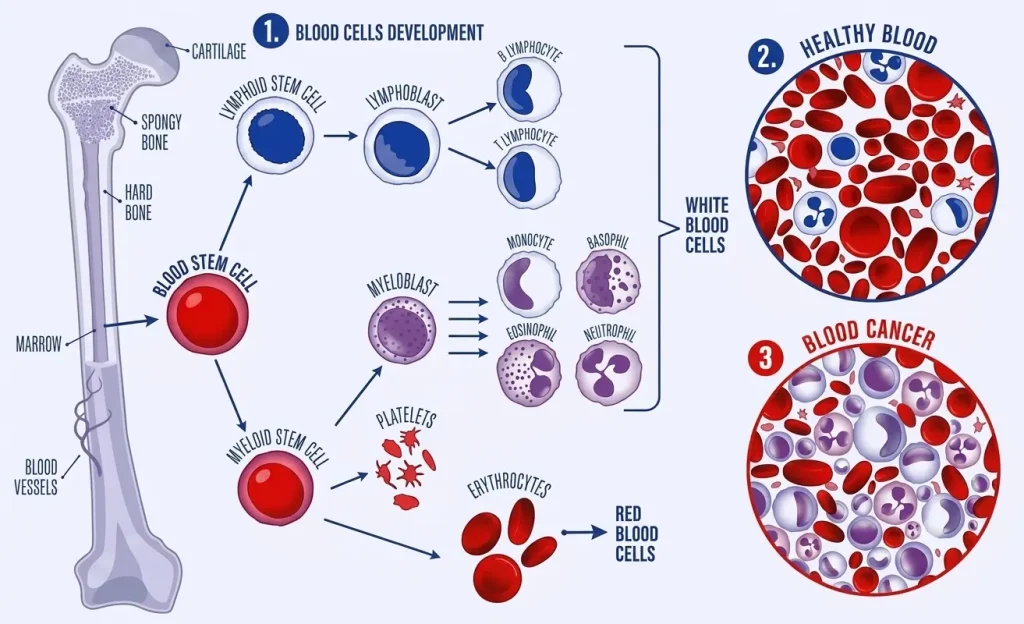
Most of these cancers originate in the bone marrow—the spongy tissue inside your bones where blood cells are created. When genetic mutations occur in developing blood cells, they begin to grow uncontrollably as abnormal cells. As these malignant cells multiply, they crowd out normal, healthy cells, impairing the body’s ability to:
Fight Infections: Unhealthy or immature white blood cells cannot defend against pathogens.
Deliver Oxygen: Reduced red blood cell production leads to severe tissue hypoxia and exhaustion.
Control Bleeding: Depleted platelet counts hinder the blood’s natural clotting mechanisms.
What the Conditions Are
Hematologic cancers are broadly classified into four major categories based on where they originate and how they behave:
Leukaemia: A cancer of the blood-forming tissues, including the bone marrow and lymphatic system. It usually involves the overproduction of abnormal, immature white blood cells (blasts) that crowd out healthy red blood cells and platelets. It can be acute (fast-growing) or chronic (slower-developing).
Lymphoma: A cancer that begins in the lymphatic system—specifically in lymphocytes, a type of infection-fighting white blood cell. It primarily affects the lymph nodes, spleen, and bone marrow. The two main types are Hodgkin Lymphoma (marked by the presence of Reed-Sternberg cells) and Non-Hodgkin Lymphoma (NHL).
Multiple Myeloma: A cancer of the plasma cells, which are white blood cells responsible for producing disease-fighting antibodies. Malignant plasma cells build up in the bone marrow, forming tumors in solid bone and producing abnormal proteins (paraproteins or M-proteins) that damage bones, kidneys, and immunity.
Myelodysplastic Disorders (MDS): A group of conditions where the stem cells in the bone marrow fail to mature into healthy, functioning blood cells. Often referred to as “pre-leukemia,” MDS can progress into acute myeloid leukemia (AML) if left untreated.
Common Symptoms
While symptoms vary depending on the specific blood cancer type and stage, many present overlapping warning signs due to bone marrow failure or lymphatic congestion:
| Condition Type | Characteristic Warning Signs & Symptoms |
|---|---|
|
Leukaemia |
Frequent infections, high fevers, easy bruising or bleeding, tiny red spots on the skin (petechiae), severe fatigue, bone pain. |
|
Lymphoma |
Painless, swollen lymph nodes in the neck, armpits, or groin; drenching night sweats; unexplained weight loss; persistent itching. |
|
Multiple Myeloma |
Persistent bone pain (especially in the back or ribs), frequent bone fractures, elevated kidney values, high blood calcium levels (hypercalcemia), numbness in legs. |
|
Myelodysplastic Disorders |
Shortness of breath during minor exertion, pale skin, weakness, recurrent severe viral/bacterial infections, easy bleeding. |
Possible Causes & Risk Factors
Exact causes often trace back to acquired genetic mutations in blood stem cells. Key contributing factors include:
- Genetic Factors: Inherited genetic syndromes (such as Down Syndrome) or non-inherited, acquired chromosomal mutations.
- Environmental & Chemical Exposures: Prolonged exposure to toxic industrial chemicals, such as benzene, or agricultural pesticides.
- Prior Radiation or Chemotherapy: Previous cancer treatments increase the risk of developing secondary leukemias or MDS later in life.
- Immune System Suppression: Autoimmune diseases, organ transplants, or viral infections (e.g., Epstein-Barr Virus, HIV, HTLV-1).
- Age: The risk for most blood cancers—especially Multiple Myeloma, MDS, and Chronic Leukaemias—increases significantly with age.
When to Consult a Hematologist
You should seek a specialist evaluation with a hematologist if you experience:
- Abnormalities on a routine Complete Blood Count (CBC) that persist over multiple tests (e.g., unexplained low hemoglobin, low platelets, or high white cell count).
- Painless, enlarged lymph nodes that do not shrink after 2–4 weeks.
- The "B-symptoms": unexplained fever, unexplained weight loss (>10% of body weight), and drenching night sweats.
- Unexplained bone pain accompanied by abnormal kidney function or high calcium levels.
How Blood Cancers Are Diagnosed
Accurate diagnosis requires advanced pathology and molecular testing to guide precise treatment:
- Peripheral Blood Examination & CBC: Checks blood cell counts, shapes, and presence of abnormal immature blast cells under a microscope.
- Bone Marrow Aspiration & Biopsy: Samples bone marrow tissue to determine cellular density and evaluate stem cell maturation.
- Flow Cytometry (Immunophenotyping): Identifies specific protein markers on the surface of cancer cells to distinguish exact subtypes of leukemia or lymphoma.
- Cytogenetics & Molecular Diagnostics (FISH, NGS): Maps chromosomal alterations (like the Philadelphia chromosome) and gene mutations to assist in targeted drug matching.
- Diagnostic Imaging (PET-CT, MRI): Detects lymphoma spread throughout the lymphatic system or locates myeloma bone lesions.
Available Treatment Approaches
Modern hematology offers precision therapies designed to target specific cancer pathways while minimizing overall toxicity:
- Targeted Therapies & Small Molecule Inhibitors: Precision oral medications (e.g., TKIs) that block specific mutated proteins inside cancer cells.
- Immunotherapy & Monoclonal Antibodies: Lab-engineered antibodies that bind to cancer cell markers, directing the patient’s own immune system to destroy them.
- Chemotherapy Regimens: Systemic medications designed to destroy rapidly dividing malignant cells across acute stages.
- Bone Marrow / Stem Cell Transplantation: Replaces damaged or cancerous bone marrow with healthy stem cells from an matched donor (Allogeneic) or from the patient's own harvested cells (Autologous).
- Supportive Care: Blood transfusions, growth factor injections (EPO, G-CSF), and targeted bone-strengthening drugs (bisphosphonates) to preserve quality of life.
FAQs
Are all blood cancers terminal?
No. Advances in targeted therapies, immunotherapies, and stem cell transplants have significantly improved prognosis. Many types of chronic leukemias and lymphomas can be managed as chronic, treatable conditions or cured completely.
Is a bone marrow transplant always required for blood cancer treatment?
Not always. Many blood cancers respond well to targeted oral medications, chemotherapy, or immunotherapies without needing a transplant. A transplant is typically considered for aggressive, relapsed, or high-risk cases.
Can blood cancers be prevented?
Most blood cancers cannot be directly prevented because they result from spontaneous genetic mutations. Avoiding known risk factors, like benzene exposure or tobacco smoke, reduces general risk.
Our Services
Get an Appointment
Schedule your expert consultation with Dr. Nitin Chaudhary today.