
Abnormal Blood Counts and Reports
Abnormal Blood Counts and Reports
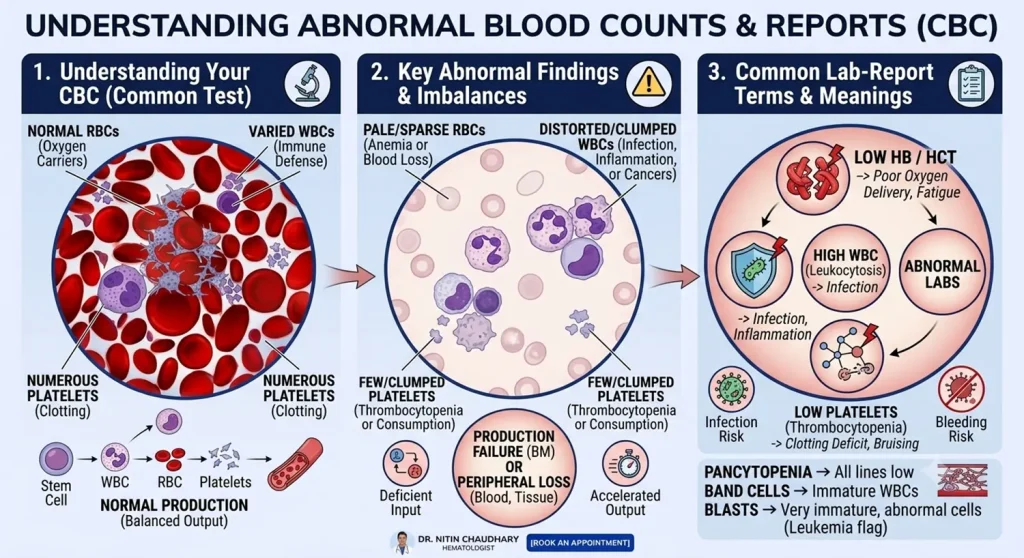
An abnormal blood count occurs when the levels of red blood cells, white blood cells, or platelets deviate from the standard reference ranges established for healthy individuals. A routine test like a Complete Blood Count (CBC) serves as a primary window into your overall health, often providing the first sign of an underlying medical condition—ranging from simple, temporary nutritional deficiencies to complex bone marrow or hematologic disorders.
What an Abnormal Blood Report Means
Blood counts are typically measured across three primary cellular components:
Abnormal Red Blood Cell (RBC) Parameters:
Low RBC / Haemoglobin (Anemia): Indicates reduced oxygen-carrying capacity throughout the body.
High RBC / Haemoglobin (Erythrocytosis / Polycythemia): Indicates an overproduction of red blood cells, which can thicken the blood and increase clotting risks.
Abnormal White Blood Cell (WBC) Parameters:
Low WBC (Leukopenia / Neutropenia): Reduces the immune system’s ability to defend against viral, bacterial, and fungal infections.
High WBC (Leukocytosis): Frequently signals active infection, inflammation, severe stress, or bone marrow disorders like leukemia.
Abnormal Platelet Parameters:
Low Platelets (Thrombocytopenia): Impairs blood clotting, leading to excessive bruising or bleeding risks.
High Platelets (Thrombocytosis): Can be a reactive response to inflammation or a primary marrow disorder, raising the risk of abnormal blood clots.
Pancytopenia / Bicytopenia: A simultaneous drop across all three cell lines (pancytopenia) or two cell lines (bicytopenia), pointing to central bone marrow underproduction or accelerated destruction.
Common Symptoms
Because blood reports reflect different cell types, physical symptoms depend on which specific cell line is elevated or reduced:
| Affected Parameter | Associated Physical Symptoms |
|---|---|
|
Low Red Cells (Anemia) |
Persistent fatigue, unusual weakness, pale skin, shortness of breath, dizziness, and cold hands or feet. |
|
High Red Cells (Polycythemia) |
Headaches, dizziness, blurred vision, reddish skin flushing, and generalized itching (pruritus), especially after a warm bath. |
|
Low White Cells (Leukopenia) |
Frequent, recurrent infections, slow-healing wounds, persistent low-grade fever, and mouth ulcers. |
|
Low Platelets (Thrombocytopenia) |
Unexplained skin bruising (ecchymosis), tiny purple/red spots on legs (petechiae), frequent nosebleeds, or prolonged bleeding from minor cuts. |
Possible Causes
An abnormal blood report is a finding, not a diagnosis in itself. It can stem from a wide variety of medical causes:
- Nutritional Deficiencies: Inadequate levels of Iron, Vitamin B12, or Folate affecting cell synthesis.
- Infections & Inflammation: Acute or chronic viral (e.g., Dengue, HIV, Hepatitis), bacterial, or parasitic infections driving counts up or down.
- Autoimmune Conditions: Disorders such as Lupus or Rheumatoid Arthritis causing the immune system to attack blood cells.
- Medications & Medical Therapies: Side effects from antibiotics, anticonvulsants, immunosuppressants, or chemotherapy.
- Bone Marrow Disorders: Primary conditions like Aplastic Anemia, Myelodysplastic Syndromes (MDS), Myeloproliferative Neoplasms (MPN), Leukemia, or Lymphoma.
- Chronic Diseases: Kidney disease, liver disease, or thyroid imbalances altering red cell or platelet regulation.
When to Consult a Hematologist
While many abnormal blood reports are temporary or easily correctable, you should seek a specialized evaluation with a hematologist if you notice:
- Persistently abnormal CBC results on repeat testing that fail to normalize over time.
- Unexplained drops across multiple cell lines simultaneously (e.g., low haemoglobin alongside low platelets).
- Significantly elevated blood counts (e.g., severe leukocytosis or high platelet counts over 450,000/uL without an active infection.
- Abnormal lab findings accompanied by systemic symptoms like unexplained weight loss, night sweats, fever, or swollen lymph nodes.
- Abnormal peripheral blood smear reports noting immature cells (blasts) or abnormal cell shapes.
How Abnormal Blood Reports Are Evaluated and Diagnosed
Investigating an abnormal blood report involves a systematic, step-by-step diagnostic approach:
- Repeat Complete Blood Count (CBC) with Automated Differential: Confirms initial findings and measures specific cell subtypes (neutrophils, lymphocytes, monocytes, eosinophils, basophils).
- Peripheral Blood Film (Smear) Examination: A crucial diagnostic step where a hematologist examines blood cells under a microscope to analyze cell size, shape, structure, and check for atypical or immature cells.
- Iron & Nutritional Panels: Measures serum ferritin, iron saturation, Vitamin B12, and folate levels to rule out deficiency states.
- Reticulocyte Count: Evaluates how rapidly the bone marrow is manufacturing new red blood cells.
- Inflammatory & Autoimmune Marker Screening: Tests ESR, CRP, ANA, and direct Coombs tests to identify underlying inflammatory or autoimmune destruction.
- Bone Marrow Examination (Aspiration & Biopsy): Performed when primary marrow dysfunction is suspected, assessing marrow structure, cellular density, and cell maturation.
- Cytogenetic and Molecular Testing: Advanced DNA sequencing (NGS) and FISH panels to identify specific chromosomal or genetic mutations driving blood cell production abnormalities.
Available Treatment Approaches
Treatment is entirely tailored to the identified underlying cause of the abnormal count:
- Targeted Nutritional Therapy: High-potency oral or intravenous iron, Vitamin B12 injections, or folic acid supplementation to correct deficiencies.
- Medication Review & Adjustment: Modifying or discontinuing drugs identified as causing drug-induced cytopenias.
- Treating Underlying Infections & Illnesses: Managing chronic inflammation, autoimmune conditions, or viral infections to restore secondary count imbalances.
- Immunosuppressive & Targeted Therapies: Steroids or targeted biologic drugs to halt autoimmune destruction of platelets or red blood cells.
- Growth Factor Support: Administration of medications like Erythropoietin (EPO) or Granulocyte Colony-Stimulating Factor (G-CSF) to stimulate bone marrow production.
- Advanced Hematologic Care: Specialized protocols including cytoreductive therapies, targeted oral agents, or Bone Marrow / Stem Cell Transplantation for primary bone marrow disorders.
FAQs
Does an abnormal blood report always mean I have a serious disease?
No. Most abnormal blood counts are mild, temporary, and caused by non-cancerous factors such as dehydration, recent viral infections, stress, or mild nutritional deficiencies. However, persistent abnormalities should always be reviewed by a specialist to rule out serious underlying conditions.
Why do I need to repeat my Complete Blood Count (CBC)?
Blood counts fluctuate naturally due to hydration, acute minor illnesses, or lab variability. Repeating the test helps establish whether an abnormality is a transient spike/dip or a persistent trend requiring deeper evaluation.
What is a peripheral blood smear and why is it important?
While automated machines count blood cells, a peripheral blood smear allows a trained hematologist to inspect the physical shape, maturity, and quality of your blood cells directly under a microscope, providing critical details that machines cannot detect.
Our Services
Get an Appointment
Schedule your expert consultation with Dr. Nitin Chaudhary today.