
Bone Marrow Failure Syndrome

Bone Marrow Failure Syndromes
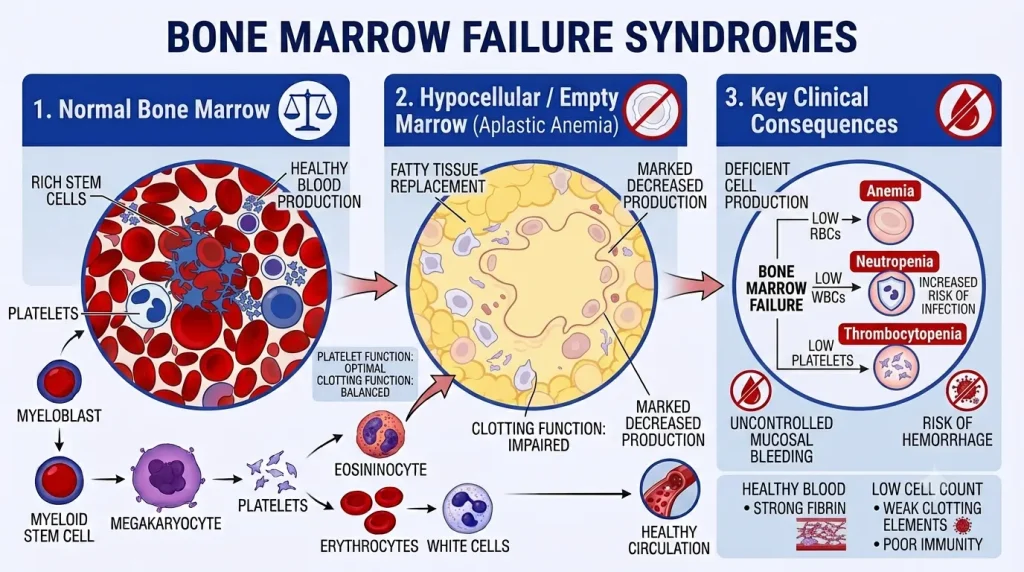
Bone Marrow Failure Syndromes (BMFS) represent a group of rare, life-threatening blood disorders where the bone marrow fails to produce an adequate supply of healthy functional blood cells—red blood cells, white blood cells, and platelets. This leads to severe, generalized blood count deficits known as pancytopenia.
BMFS can be either acquired (developing suddenly or gradually later in life due to immune system failure) or inherited (present from birth due to genetic mutations). Prompt diagnosis and specialist care are essential to prevent severe infections, dangerous bleeding, and organ complications.
Key Types of Bone Marrow Failure
Bone marrow failure syndromes are classified based on whether they affect all blood cell lines or specific lineages:
Aplastic Anemia: The most common acquired bone marrow failure disorder, where the body’s immune system attacks hematopoietic stem cells, leaving the bone marrow largely empty (hypocellular).
Inherited Bone Marrow Failure Syndromes (IBMFS): Congenital genetic conditions that often present in childhood, including Fanconi Anemia, Dyskeratosis Congenita, Diamond-Blackfan Anemia, and Shwachman-Diamond Syndrome.
Paroxysmal Nocturnal Hemoglobinuria (PNH): An acquired genetic defect closely linked with Aplastic Anemia that causes premature breakdown of red blood cells (hemolysis) and heightened risk of blood clots.
Pure Red Cell Aplasia (PRCA): A selective bone marrow failure condition specifically characterized by severe, isolated reduction in red blood cell production.
Common Symptoms
Because bone marrow failure affects multiple blood cell types, symptoms manifest across three distinct areas:
| Affected Blood Line | Primary Symptoms |
|---|---|
|
Low Red Blood Cells (Anemia) |
Severe, persistent fatigue, pale skin and lips (pallor), shortness of breath upon minor exertion, dizziness, and rapid heartbeat. |
|
Low White Blood Cells (Leukopenia/Neutropenia) |
Frequent, recurring, or unusually severe infections, persistent high fevers, and mouth sores/ulcers. |
|
Low Platelets (Thrombocytopenia) |
Unexplained or easy bruising, pinpoint red/purple spots on skin (petechiae), frequent nosebleeds, bleeding gums, and prolonged bleeding from minor cuts. |
Possible Causes & Risk Factors
- Autoimmune Destruction: In acquired Aplastic Anemia, T-lymphocytes erroneously attack and destroy the bone marrow's stem cells.
- Inherited Genetic Mutations: Defects in genes responsible for DNA repair, telomere maintenance, or ribosome function (as seen in Fanconi Anemia or Dyskeratosis Congenita).
- Toxic & Chemical Exposures: Environmental exposure to industrial chemicals (such as benzene), pesticides, or heavy metals.
- Viral Infections: Certain viruses—including Hepatitis viruses, Epstein-Barr Virus (EBV), Cytomegalovirus (CMV), and HIV—can trigger post-viral marrow aplasia.
- Medications & Radiation: Adverse reactions to specific medications (e.g., gold salts, chloramphenicol) or high-dose radiation exposure.
When to Consult a Hematologist
You should seek immediate evaluation from a hematologist if you or your child experience:
- A routine Complete Blood Count (CBC) showing persistently low counts across two or more cell lines (bicytopenia or pancytopenia).
- Unexplained, severe fatigue combined with unexpected skin bruising or tiny red spots (petechiae).
- Recurrent, severe bacterial or fungal infections that fail to resolve with standard antibiotics.
- A family history of congenital bone marrow failure, early-onset blood cancers, or physical abnormalities characteristic of Fanconi Anemia or related syndromes.
How Bone Marrow Failure is Diagnosed
A definitive diagnosis requires evaluating both peripheral blood counts and direct samples from the bone marrow:
- Complete Blood Count (CBC) with Reticulocyte Count: Evaluates circulating red cells, white cells, and platelets, while reticulocytes measure the bone marrow's active red cell production rate.
- Bone Marrow Aspiration & Trephine Biopsy: The cornerstone diagnostic test. A small sample of marrow tissue is examined under a microscope to confirm hypocellularity (empty marrow space filled with fat cells) and exclude leukemia or myelodysplasia.
- Chromosomal Breakage Analysis (Diepoxybutane/DEB Test): Essential for diagnosing Fanconi Anemia by evaluating how white blood cells respond to DNA-damaging agents.
- Flow Cytometry for PNH Clones: Detects the absence of GPI-anchored proteins (CD55 and CD59) on red and white cells to rule out or confirm Paroxysmal Nocturnal Hemoglobinuria.
- Next-Generation Genetic Sequencing (NGS): Identifies specific inherited gene mutations to guide family screening and targeted therapeutic choices.
Available Treatment Approaches
Treatment strategies focus on restoring functional blood cell levels, halting autoimmune destruction, or definitively replacing non-functioning marrow:
Supportive Care & Transfusion Therapy:
- Blood Component Support: Regular packed red blood cell (PRBC) and platelet transfusions to manage acute anemia and bleeding risks.
- Infection Prevention: Prophylactic antibiotics, antifungals, and antivirals to protect neutropenic patients.
- Immunosuppressive Therapy (IST): First-line medical treatment for non-transplant candidates with acquired Aplastic Anemia, combining Anti-Thymocyte Globulin (ATG) and Cyclosporine to prevent immune attack on stem cells.
- Thrombopoietin (TPO) Receptor Agonists: Medications like Eltrombopag that stimulate remaining stem cells to increase blood cell production.
- Bone Marrow / Stem Cell Transplantation (BMT): The only curative option for severe Aplastic Anemia and inherited bone marrow failure syndromes. Replacing diseased marrow with healthy stem cells from a matched donor restores lifelong normal blood cell production.
FAQs
Is Bone Marrow Failure Syndrome a type of blood cancer?
No. Bone marrow failure is not a cancer; it is a state of bone marrow underproduction or empty marrow space. However, certain inherited types (like Fanconi Anemia or Dyskeratosis Congenita) carry a higher risk of transforming into blood cancers like Acute Myeloid Leukemia (AML) over time.
Can Aplastic Anemia be cured?
Yes. Allogeneic Bone Marrow / Stem Cell Transplantation using a matched sibling or matched unrelated donor can cure Aplastic Anemia, particularly when performed early in young patients. For patients treated with immunosuppressive therapy, long-term remission is frequently achievable.
How do inherited bone marrow failure syndromes differ from acquired ones?
Inherited forms are caused by genetic mutations present at birth, often accompanied by physical features (such as thumb/radius abnormalities, skin pigmentation changes, or nail dystrophy) and family history. Acquired forms develop spontaneously later in life due to autoimmune destruction or external triggers.
Our Services
Get an Appointment
Schedule your expert consultation with Dr. Nitin Chaudhary today.