
Paediatric Blood Disorders

Paediatric Blood Disorders and Childhood Cancers
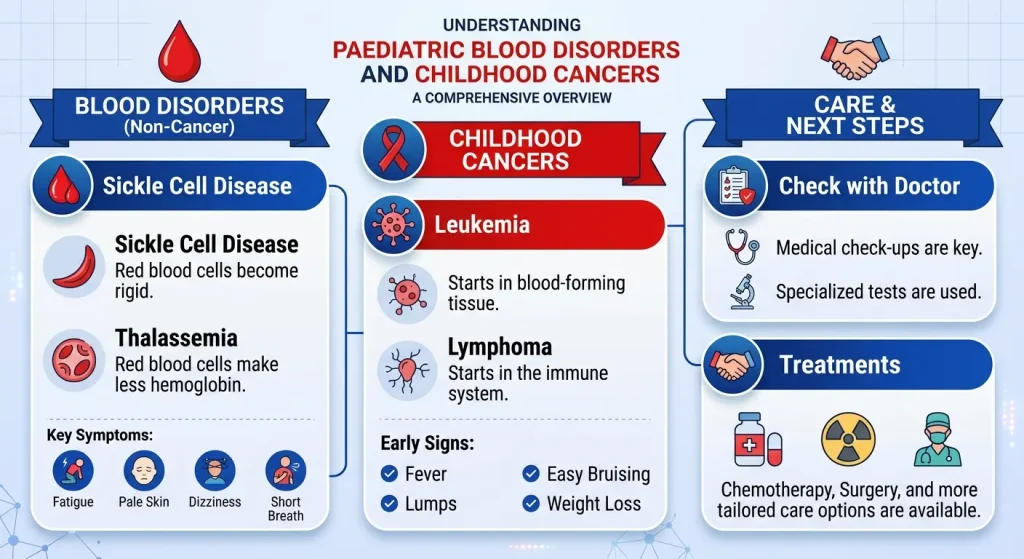
Paediatric blood disorders and childhood cancers refer to a group of medical conditions in infants, children, and adolescents that affect the development, function, or growth of blood cells and the lymphatic system. While pediatric cancers differ significantly from adult cancers—often responding better to treatments—early detection and specialized care are critical for ensuring optimal growth, long-term health, and overall well-being.
What These Conditions Are
Pediatric hematologic and oncologic conditions are divided into two primary categories:
Non-Malignant Paediatric Blood Disorders: Conditions affecting the function or production of red blood cells, white blood cells, or platelets. Examples include Nutritional Anemias (Iron Deficiency, B12 Deficiency), Inherited Hemoglobinopathies (Thalassemia Major, Sickle Cell Disease), Immune Thrombocytopenia (ITP), and Coagulation Disorders (Hemophilia, von Willebrand Disease).
Childhood Malignancies (Blood Cancers): Cancers originating in the blood-forming tissues or immune systems of children. Key types include Acute Lymphoblastic Leukaemia (ALL), Acute Myeloid Leukaemia (AML), Hodgkin and Non-Hodgkin Lymphoma, and Myelodysplastic Syndromes (MDS).
Common Symptoms in Children
Because young children may not easily articulate how they feel, parents and caregivers should watch for persistent behavioral and physical signs:
| Category | Warning Signs & Symptoms |
|---|---|
|
Energy & Appearance |
Unusual paleness (pallor), unexplained lethargy, loss of interest in play, delayed growth milestones. |
|
Infections & Fevers |
Unexplained or recurring high fevers, frequent bacterial/viral infections that take longer than usual to clear. |
|
Bleeding & Skin Signs |
Frequent nosebleeds, easy or unexpected bruising, bleeding gums, tiny pinpoint red spots on the skin (petechiae). |
|
Physical Swellings |
Painless, firm swellings or lumps in the neck, armpits, groin, or abdomen; unexplained bone, joint, or limp-inducing leg pain. |
Possible Causes & Risk Factors
Unlike adult cancers, childhood blood disorders and cancers are rarely linked to lifestyle or environmental factors. Primary drivers include:
- Genetic & Inherited Traits: Inherited gene mutations passed from parents (e.g., Sickle Cell trait, Thalassemia trait, or Hemophilia genes).
- Congenital Syndromes: Chromosomal conditions such as Down syndrome, which carry a higher baseline risk for developing leukemia.
- Acquired Genetic Mutations: Spontaneous DNA changes that occur in stem cells during rapid early childhood development.
- Immune System Dysregulation: Autoimmune responses where the child’s immune system mistakenly attacks healthy blood components.
When to Consult a Paediatric Hematologist
Prompt specialist evaluation is recommended if a child presents with:
- Routine blood work showing persistent anemia, low platelets, or abnormal white cell counts.
- Unexplained, persistent fevers or recurrent severe infections that do not resolve with standard pediatric care.
- Painless swollen lymph nodes lasting longer than 2 to 3 weeks.
- Unexplained bone pain or limping that wakes the child at night.
- A family history of hereditary blood conditions requiring newborn or early childhood screening.
How Paediatric Blood Disorders Are Diagnosed
Diagnosing pediatric hematologic conditions requires gentle, child-focused techniques and precise testing:
- Pediatric Complete Blood Count (CBC) & Blood Smear: Measures blood cell levels and examines cell shape under a microscope using minimal sample volumes.
- Specialized Hemoglobin Analysis: Techniques like HPLC (High-Performance Liquid Chromatography) identify abnormal hemoglobins (Thalassemia, Sickle Cell).
- Bone Marrow Aspiration & Biopsy: Performed under child-safe sedation to safely examine stem cell production and rule out or confirm leukemia.
- Flow Cytometry & Cytogenetic Testing: Maps specific cell surface markers and chromosomal alterations to precisely guide targeted therapies.
- Diagnostic Imaging (Ultrasound, PET-CT, MRI): Locates lymph node involvement, tissue masses, or organ enlargement (splenomegaly/hepatomegaly).
Available Treatment Approaches
Pediatric care focuses on effective treatment while preserving normal growth, organ function, and long-term development:
- Targeted Medical & Support Therapies: Blood transfusions, iron chelation, growth factors, or factor replacement therapy for hemophilia.
- Child-Centric Chemotherapy Regimens: Multi-agent protocol-based chemotherapy carefully dosed to cure leukemias and lymphomas while protecting vital organs.
- Immunotherapy & Monoclonal Antibodies: Targeted treatments that harness the child's immune system to destroy malignant cells with fewer toxic side effects.
- Paediatric Stem Cell / Bone Marrow Transplant: Replaces damaged or cancerous bone marrow with healthy stem cells from a matched family donor or matched unrelated donor.
FAQs
How do childhood blood cancers differ from adult blood cancers?
Childhood cancers tend to grow more rapidly, but children’s bodies generally tolerate intensive treatments better than adults. Consequently, cure rates for many pediatric leukemias (such as ALL) are significantly higher than in adult cases.
Can pediatric blood disorders be detected before birth or early in infancy?
Yes. Prenatal screening, carrier testing, and routine newborn screening programs can detect conditions like Thalassemia and Sickle Cell Disease early, allowing for timely intervention.
Is a bone marrow biopsy safe for a young child?
Yes. In pediatric hematology, procedures like bone marrow biopsies are performed under short, safe sedation managed by an anesthesiologist, ensuring the child feels no pain or anxiety during the test.
Our Services
Get an Appointment
Schedule your expert consultation with Dr. Nitin Chaudhary today.